The President of the Administrative Court of Kosovo, Mr. Kreshnik Kaçiu, Delivered a Lecture to Law Faculty Students
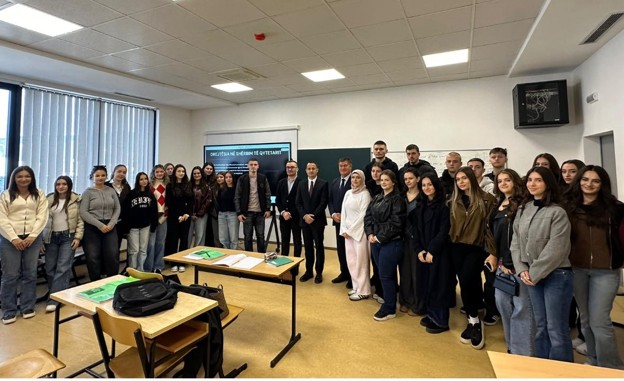
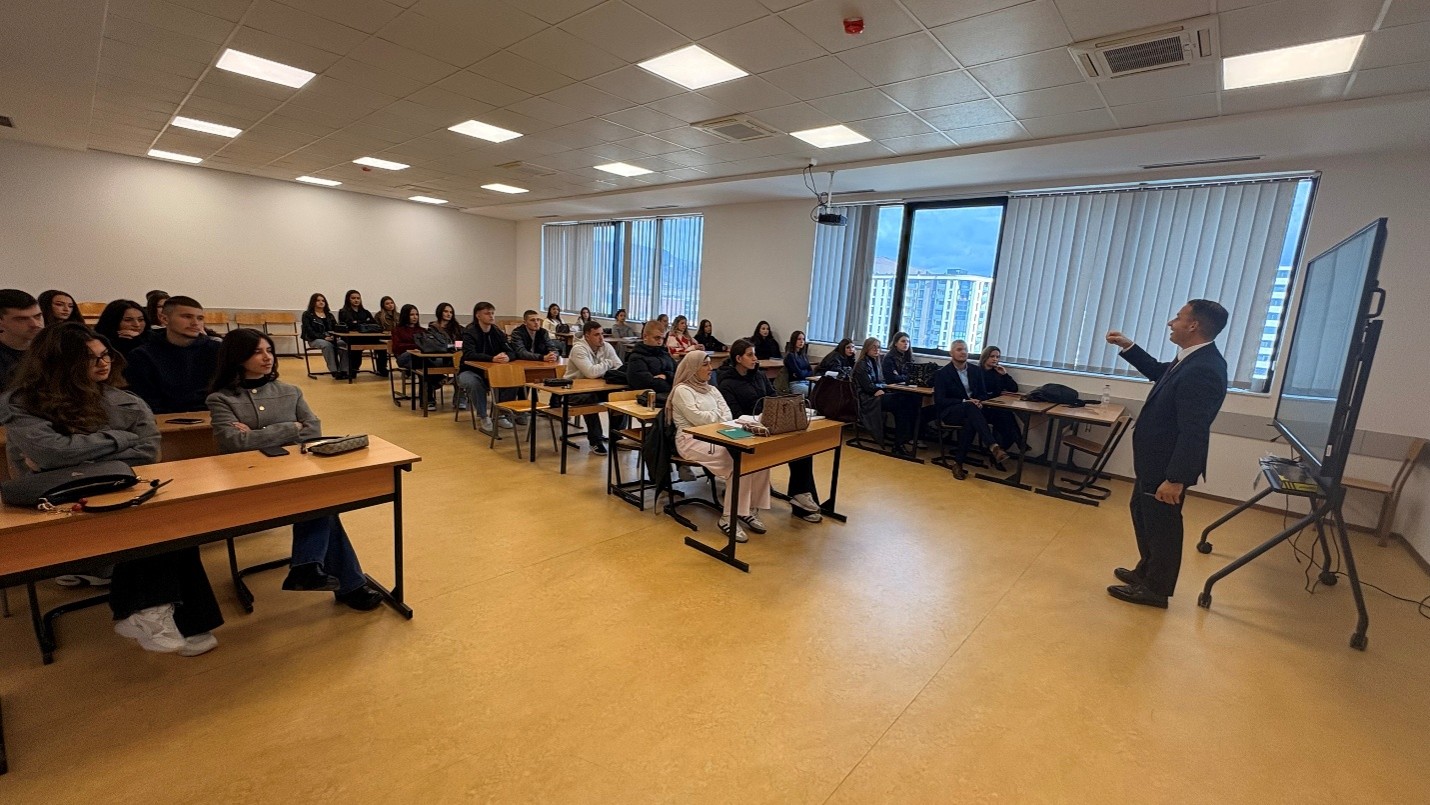
At the invitation of the Dean of the Faculty of Law, Prof. Dr. Islam Qerimi, a special lecture was organized for students of the Faculty of Law, delivered by the President of the Administrative Court of Kosovo, Mr. Kreshnik Kaçiu, on the topic “The Administrative Court of the Republic of Kosovo: Organization, Competences, and Judicial Protection of Citizens.”
During the lecture, students had the opportunity to gain a deeper understanding of the role and functioning of the Administrative Court, the importance of judicial review of public administration, and the legal mechanisms available to protect citizens’ rights and legitimate interests.
An important part of the lecture focused on the organizational structure of the Administrative Court, which operates through four specialized departments: the Fiscal Department, the Department for Labour Disputes, the Department for Social and Pension Schemes, and the General Department. This structure was presented as a framework for addressing different categories of administrative disputes in accordance with the court’s statutory competences.
Furthermore, Mr. Kaçiu explained the distinction between administrative proceedings, conducted before public administration bodies, and administrative disputes, through which judicial review of the legality of administrative decisions and actions is exercised. In this context, he emphasized the importance of the fundamental principles governing public administration, including legality, proportionality, equality, objectivity, the protection of legitimate expectations, and the right to an effective legal remedy.
Students were also introduced to the legal remedies available to citizens when a public authority issues an unlawful decision, rejects an application, or fails to act within the legally prescribed deadlines. Through explanations of the filing of lawsuits, the conduct of judicial proceedings, and the delivery of judgments, the lecture illustrated the legal avenues available for seeking judicial protection against administrative actions or omissions.
A practical dimension of the lecture involved the discussion of specific cases, including the refusal of a building permit by a municipality. This example demonstrated the role of the court in assessing the legality of administrative decisions and safeguarding citizens’ rights.
The lecture also addressed the importance of procedural efficiency, the quality and consistency of judicial decision-making, and the role of digitalization in enhancing transparency and strengthening public trust in administrative justice.
The lecture provided a valuable opportunity for students to connect their theoretical knowledge with judicial practice, encouraging discussion on the rule of law, the accountability of public administration, and the importance of judicial review in a democratic society.
The Faculty of Law expresses its sincere gratitude to Mr. Kreshnik Kaçiu for his contribution and for sharing his professional experience with the students. The Faculty recognizes the importance of cooperation between higher education institutions and judicial institutions in preparing future legal professionals.